

Dynamic stiffness measurement and impact noise reduction
What problem are we solving?
One of the most critical parameters when choosing a soundproofing underlay for a "floating floor" is its dynamic stiffness (S¹). Often manufacturers only provide static load data, which does not give an idea of how the material will behave under dynamic impact (stepping, jumping).
By measuring the dynamic stiffness on small samples, we can accurately predict the impact sound insulation improvement (△L) of a given component. This method saves time and money as it allows for the comparison of dozens of options in a laboratory environment without the need to build real, full-scale floor structures.

Standards and status of the measurement
Our methodology is based on measuring the resonant frequency of a mass-spring system, described in the following standards:
- ISO 9052-1: Acoustics — Determination of dynamic stiffness — Part 1: Materials used under floating floors in dwellings. (Basic standard for the determination of S¹).
- ISO 12354-2: Building acoustics — Estimation of acoustic performance of buildings from the performance of elements — Part 2: Impact sound insulation between rooms. (Used to calculate △L based on the measured dynamic stiffness).
Important clarification: The measurements offered are for engineering and diagnostic purposes. They serve for part optimization and R&D activities. Measurements are not accredited and their results are intended to assist in engineering decision making, not to replace formal laboratory testing of entire floor systems.
Equipment: What do we use to measure?
To achieve maximum accuracy, we use a specialized digital circuit:
- 333D01 Digital USB Accelerometer: A high-tech digital accelerometer (Digiducer) with extremely low noise and high frequency resolution. It allows direct data transfer to analysis software without analog losses.
- Specialized software: We use software developed specifically for the purposes of acoustic analysis and dynamic stiffness calculation, which allows for precise signal processing and output of the final parameters.
- Pulse excitation method: Using a calibrated mass and sensor to determine the natural frequency of oscillation of the sample.
Practical use and sample preparation
This approach is extremely valuable for manufacturers, investors and designers. We offer flexibility in the preparation of test materials:
- Samples according to customer's request: The customer can provide their own sample (detail), executed according to our technical specifications. We provide detailed instructions for preparation, including requirements for embedding a magnet and a metal plate in the sample, which is necessary for the correct functioning of the measurement circuit.
- Manufactured by Acoustic Force: We offer a full service, including the production of samples in our facility according to your specifications.
- Usage scenarios: Prediction of △L, comparison of different materials (eco-mats, rubber, wadding) and optimization of the investment by choosing the most effective solution under a specific load.
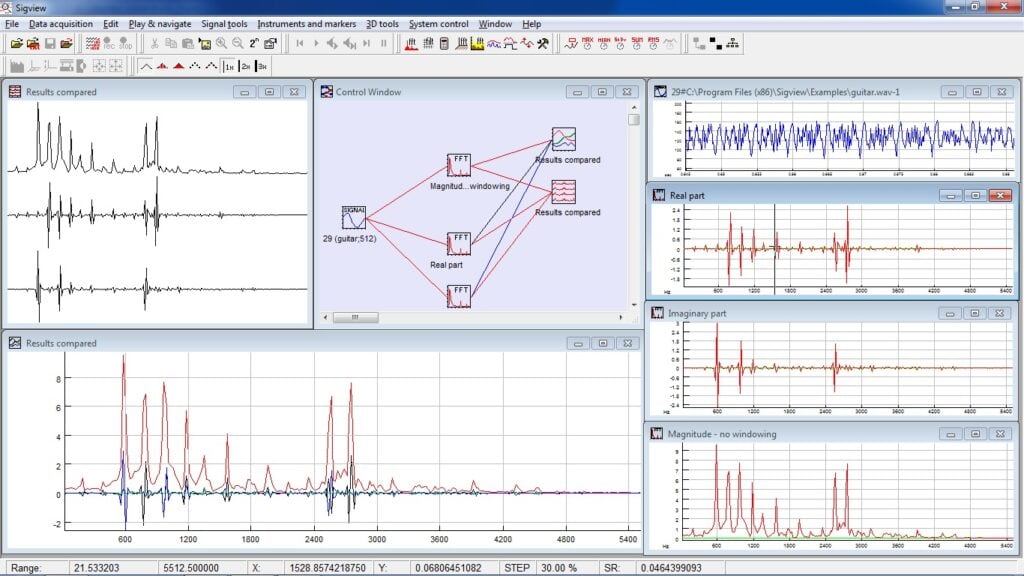

Process and Analysis: What Does the Client Get?
The measurement result is a technical report that contains:
- Dynamic stiffness (S¹): Expressed in MN/m³ – a basic indicator of the elasticity of the substrate.
- Resonant frequency (fᵣ): The frequency at which the system transmits the most energy.
- Calculated reduction (△L): Estimated value in decibels according to ISO 12354-2.
- Comparative analysis: Graphical comparison of the characteristics of different tested samples.
Frequently Asked Questions
What is the minimum sample size?
According to ISO 9052-1, samples can start from 200×200 mm, but for higher accuracy we recommend a size 50×50 cm.
Does the material need to be under load during the test?
Yes, the measurement is performed under a static load simulating the weight of the screed to account for the actual working stiffness.
What are the deadlines for implementation?
The deadlines depend on the method of sample preparation:
- Ready and dry sample provided by the customer: Results within 5 to 10 business days.
- Sample production by Acoustic Force: To 30 business days after acceptance of the request (includes technological time for drying and preparation).



"*" indicates required fields